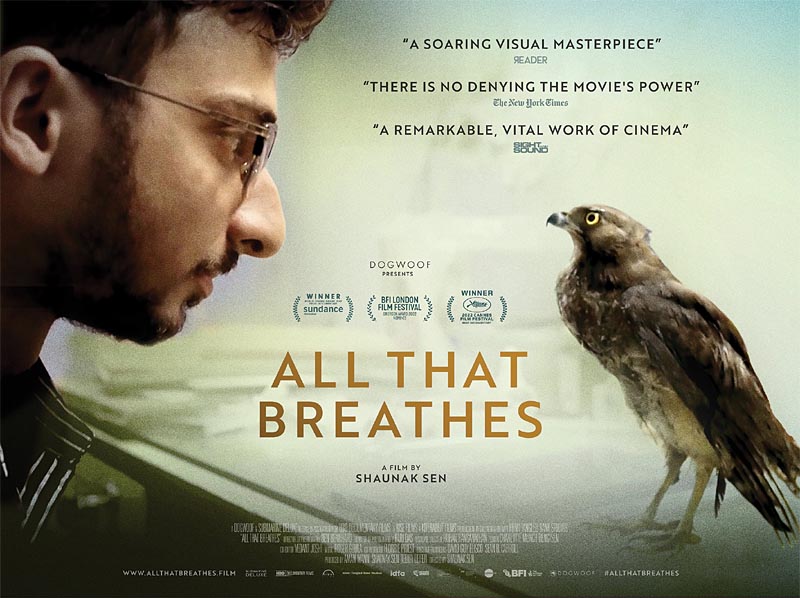
And we are back! With a fantastic film for the new academic year! Featuring as part of the university’s ‘Green Week’ we screened All That Breathes. A truly gorgeous film that tells the story of the ‘kite brothers‘ who work night and day to save the birds of New Delhi as they fall from the skies. Set against the city’s polluted urban environment and the political and social unrest, the film beautifully captures the brothers’ struggles with its intimate and poetic framing of their kinship with the natural world.
The film prompted a deep and honest conversation between audience members. With little time, it was difficult to dive into some of the emotions and response that the compelling story aroused. Below is a little summary of some of the themes that stuck out for me.
Group discussions
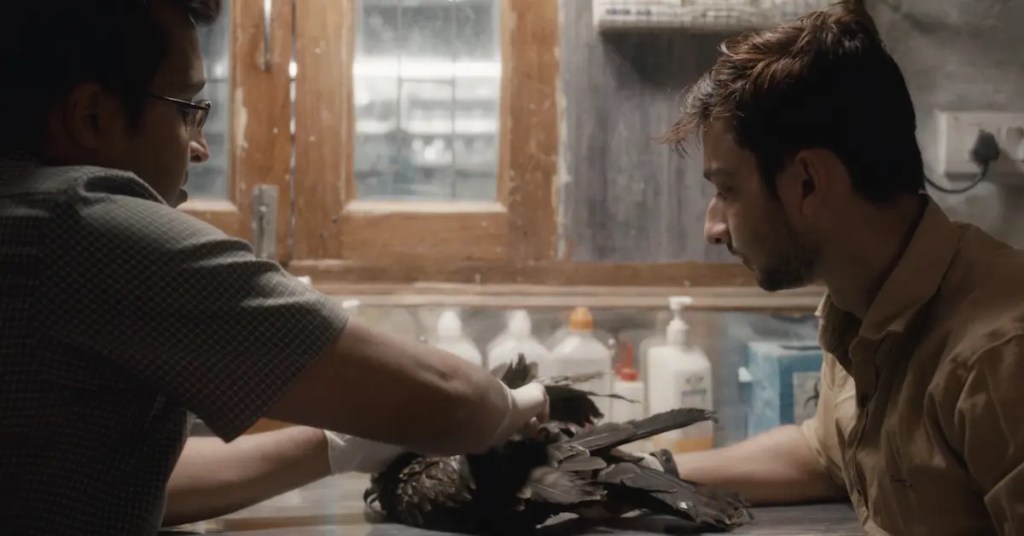
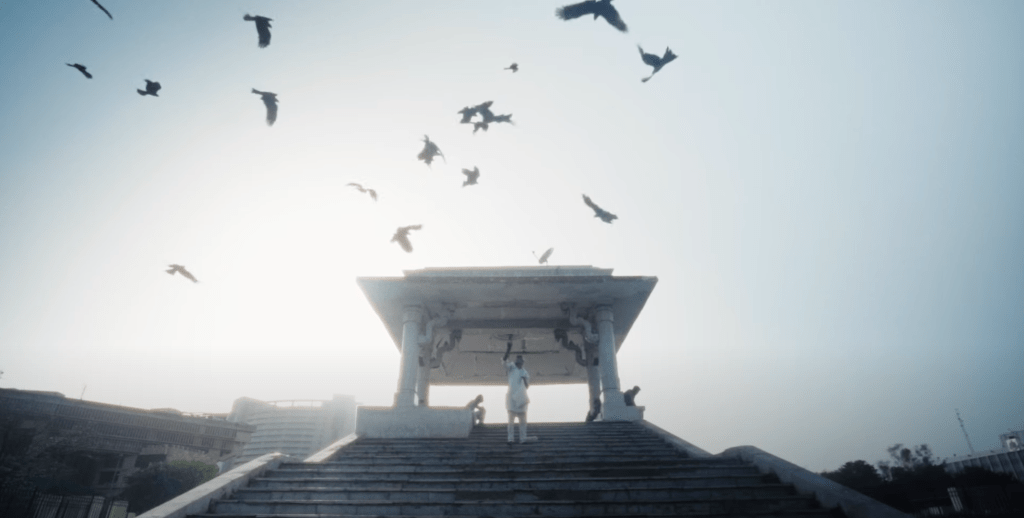
Conflict, crises and complexity where key themes that everyone in the audience were left thinking about. The human characters in the film regularly moved between, and were situated within, the chaos in the human world and disasters in their environment. The political unrest and protests that turned violent and the constantly dangerous level of air pollution gave the film a real sense of urgency. It always felt that the kite brothers were battling inevitable tidal waves that would never stop.
Yet, the film also offered a sense of purpose and calm. A serenity that permeated the urgent sense of chaos. There was a joy in the ongoing work of the brothers, a playfulness that came with their determination. The knowing that the injured and sick birds would keep coming, inevitably getting worse as pollution increased, didn’t stop them. They kept going because they cared.
This peacefulness affected us as viewers. The intimate and beautiful nature of the cinematography and editing made us feel like we were part of the film. That we, though also part of the chaos, were left mostly with that sense of calm that the human characters seem to move through their lives with.
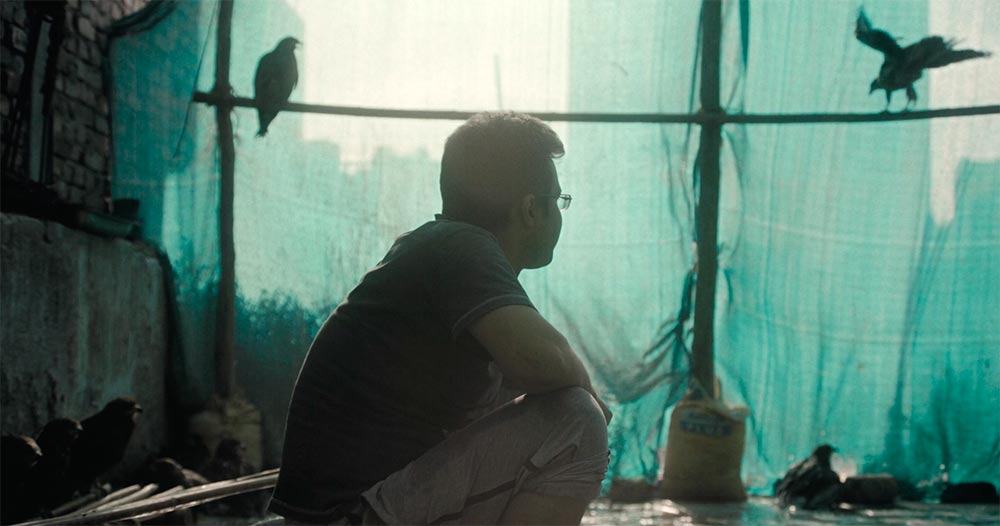
The brothers connection to the natural world was illustrated by the stories that their mother used to tell them as kids. It highlighted a sense of spirituality that bridged a human-nature divide.
This connection gave the characters agency, as their deeply rooted understanding of kinship provided them with meaning and purpose. Through feeling part of something bigger than them, they knew they were not alone. And so they developed commitment, sincerity and determination to help the natural world they are part of.
The film club audience commented on the urgency and visibility the birds and the environment provided to an issue of air pollution that is otherwise invisible and slow changing. We all agreed this was beneficial as its easier to communicate an issue when we can witness its impact on our lives and environment.
But it also revealed another story: how nature is adapting on its own accord, striving to survive in the mess that humans left behind. Changing in response to humans, not stagnant and waiting for us to save it. Nature is framed here as alive, with its own sense of agency. Whether its the glasses-stealing birds or the pouring rain that floods the basement of the hospital, its not waiting on humans support, it is changing of its own accord.
The film presented a severe urban and rural divide. Telling a story of animals quickly adapting to the city’s human infrastructure that helped us recognise the richness of our own urban environments. Evolution of rural nature to the new urban settings was happening fast. The need to adapt quickly demonstrated how fast these changes our happening in the natural world, with lizards growing extra toes, kites using cigarette puts as parasite repellent.
These non-humans are learning and changing to survive. But just like humans need nature, such as the vultures and the black kites to maintain the quantities of waste and the ever-growing landfills, nature does need our human support, such as through the efforts of the kite brothers.
At the end of the day, the audience recognised the limitations of the film and understood the dramatisation of the documentary format. They were frustrated with what went unsaid, of the lack of details about the financial difficulties the brothers had coped with, the limited coverage of the political conflicts they are living in, and questioned what other support initiatives there may have been in the area for wildlife.
The film isn’t perfect. Its a window into the lives of these brothers that romanticise elements of their strife and the challenges of the systems they live within. The audience were frustrated by this and by the feeling that the efforts of the brothers were futile against the inevitability of the ongoing degradation of the city’s environment.
But, considering that the documentary is only an hour and a half, and that it left us feeling calm and hopeful, I think we must accept the filmmaker’s inability to go in depth into some of elements of the story. And I think what it does well, is capture kinship, connection and a the richness of the beautiful relationship between humans and non-humans. As with it, it ignites a little spark of hope and potential inside of us (well it did for me) that we can change.
Personal reflections
What I found challenging from our discussion and in the film, was the tension between the idea of systems change and change on a personal or community level. It is often hard to work out how best we can support a cause we care about or act individually to implement change when the world we live in is so overwhelming and complex. The scale of these problems can often feel disempowering and futile. Leaving us with a sense that unless we can target the core issue, any change we make is meaningless.
I admit, I often get trapped in this mindset. And, if unchecked, it can lead me to feeling small and doing nothing. As what’s the point if we’re all trapped in a broken system anyway.
But I can’t help wonder, how mighty convenient of a story that is – that we are powerless. That we are alone and all too small to make any “real” difference. That anything we try will never be “enough”. It is very convenient as make us feel alone, one lonely individual, and it prevents us from doing anything! If everyone believes this story, no one tries to challenge the system at all. It doesn’t recognise that together, a big bunch of powerless people suddenly become rather powerful.
What I really liked about the film, is that its story focused on ‘care’. It highlighted the value and beauty of developing a deep meaningful connection with nature. It was a story of kinship and the value and sense of serenity that comes from acting from a position of care for other beings, for our families, our communities… And how acting on sense of purpose it can be a way of caring for ourselves too.
The film was a comment on a small (though relatively monumental) effort a few people took to make a change. And yes, they were acting as part of a big broken system. In their words, they were something of a tiny band aid on the city’s gaping wound (not a direct quote!). But they didn’t try to save these birds with the aim of saving the city. They weren’t trying to affect the wider system, to make a big “enough” difference to make their actions feel valuable. They did it because they cared.
I am definitely not saying we should ignore the core issues of our time to focus on fixing little problems. No. We have limited time, finance, energy etc. to fix every tiny issue. And yes, we should use our resources to focus on where we can make most impact.
BUT! It is a question of motive. What is the story we tell ourselves behind why we are challenging the norm, taking a stand. Is it to make a big “enough” difference to make change worthwhile, or is it because we care and want to help others?
That for me is what I took away from the film. We are part of ginormous systems that are corrupt. But if I can act from a point of care in kinship with other beings, then I can make a change that might just benefit other humans and non-humans, and might just benefit me too. And when others feel cared for and see what is possible, it might just inspire them to do the same.
Finding a way forwards
I am so thankful for the help I received in setting up the film club from the environmental management team at the university. They were a massive support the whole way through and were a big instigator in choosing this magnificent film.
I also wanted to mention that they are launching a really exciting initiative as UWE is joining with the Nature Positive University project. As part of this they are encouraging students across all campuses to get involved with identifying any species they spot… plant, animal, fungi… to help map the biodiversity and ecosystems that our campuses support.
This is an amazing way to get staff and students involved with their local urban wildlife and encourage a little bit of nature connection. It is a lovely nod to the film urban nature connection and is one way showing how we too can take part in change in our local areas – that’s good for us and can help us to protect our local environments too.
 Jelena Krivosic
Leave a comment