• Film Club: Chasing Ice

    I wanted to challenge my normal film club attendees. I often screen wildlife films and TV series that leave you feeling good or with messages about climate change tacked in at the end. But this time I wanted to go for a campaign film. One with a clear mission. And one where the film captures a project that would have happened with or without the film crew. I.e. making the film was not the mission but to communicate a message about the project being filmed.

    And (not so secretly) I wanted to go in see how we felt about the role of the adventurer – the classic explorer and hero. A story or mono-myth that is often discussed to be problematic, but informs many of our traditional and favourite myths and modern tales.1

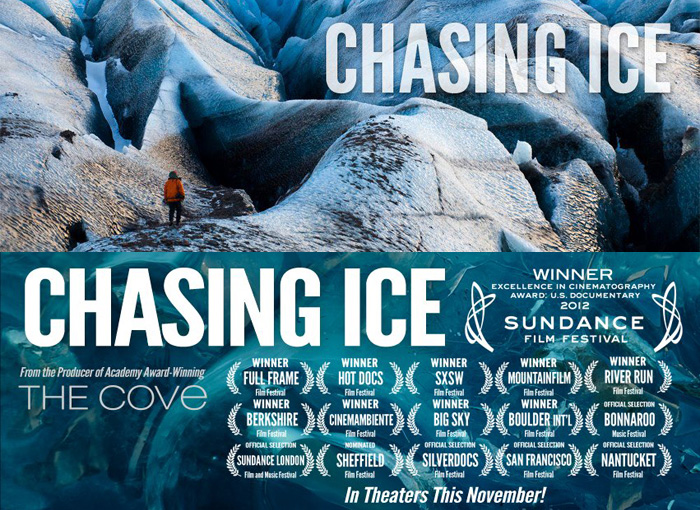
    So, for my second Reel Nature environmental film club of the academic year, I screened Chasing Ice (2012), directed by Jeff Orlowski. The film is about famed photographer, James Balog, who traveled and photographed remote areas of the Arctic with his team in his mission to capture undeniable evidence of how the changing climate is changing our planet. This film documents Balog’s dangerous journey and his efforts with his team to photograph the melting glaciers, which is all part of his Extreme Ice Survey project. Aesthetically breath taking and emotional, this film had a big impact across media and society and my film club audience too.

    “Inspired.”

    When asking audiences how they felt after watching, it was rather unanimous that the audiences’ main response was that they found the film inspirational. Many commented of the sadness they felt when they watched Balog’s journey and when they were faced with his bleak and picturesque photographs of the melting glaciers. They spoke of the power of these images to shock and engage audiences, beyond that of facts and figures, and how they effectively capture emotions that enabled an audience to engage and empathise with the issue at their heart.

    Despite the widespread emotional impact, not everyone was able to resonate and connect with the main characters – a small group of white, Western, upper/middle class males which isn’t relatable for many audiences. Furthermore, the topic of the melting Arctic is so far from all of our lived experience, so it was hard to feel a personal connection with that unknown natural landscape. The group acknowledged that the film may impact global audiences differently due to its lack of relatability and the amount of science and scientists included. However, the emotional journey and the strength of the final message seemed to translate well within our film club with each member personally feeling impacted by the film.

    Role of the explorer
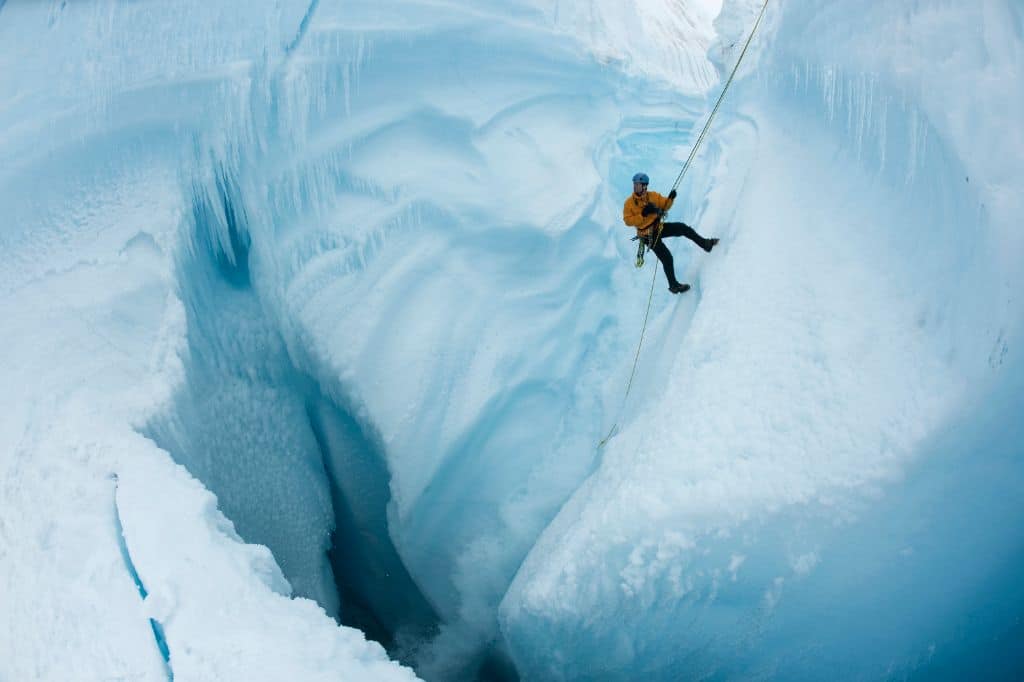
    It was Balog’s personal sacrifice and the risks he took that many of the film club’s audience quoted as their main source of inspiration. They saw this sacrifice as a demonstration of deep care for the planet. And it was this, alongside his photographs, that helped to communicate the true urgency of the mission.

    Balog’s commitment seemed to communicate and make accessible emotions of fear and grief that where reflected by the risks he took within the landscape to get his desired footage. It is his physical and personal ‘heroes journey’ that created an arch that the audience members felt they could relate and empathise with. In this form, the film provided a space or container for the audience to feel like they were part of something larger than just them. A community of like-minded people who held similar values and cared for our planet. A space where they wouldn’t be judged or have to justify and explain themselves. They knew that the film club was a bit of an echo-chamber and the self-selecting audience members would belong to the same bubble. But they questioned if he was able to use the film to target wider audiences, they too might feel the same connection.

    Despite my questioning of the heroes tale, the role these stories play as vessels for audiences emotions, for making them feel less alone in these complex interconnected global crises, is something I learnt from the screening. And something I will consider more in my future film clubs and research.

    What will you do next?
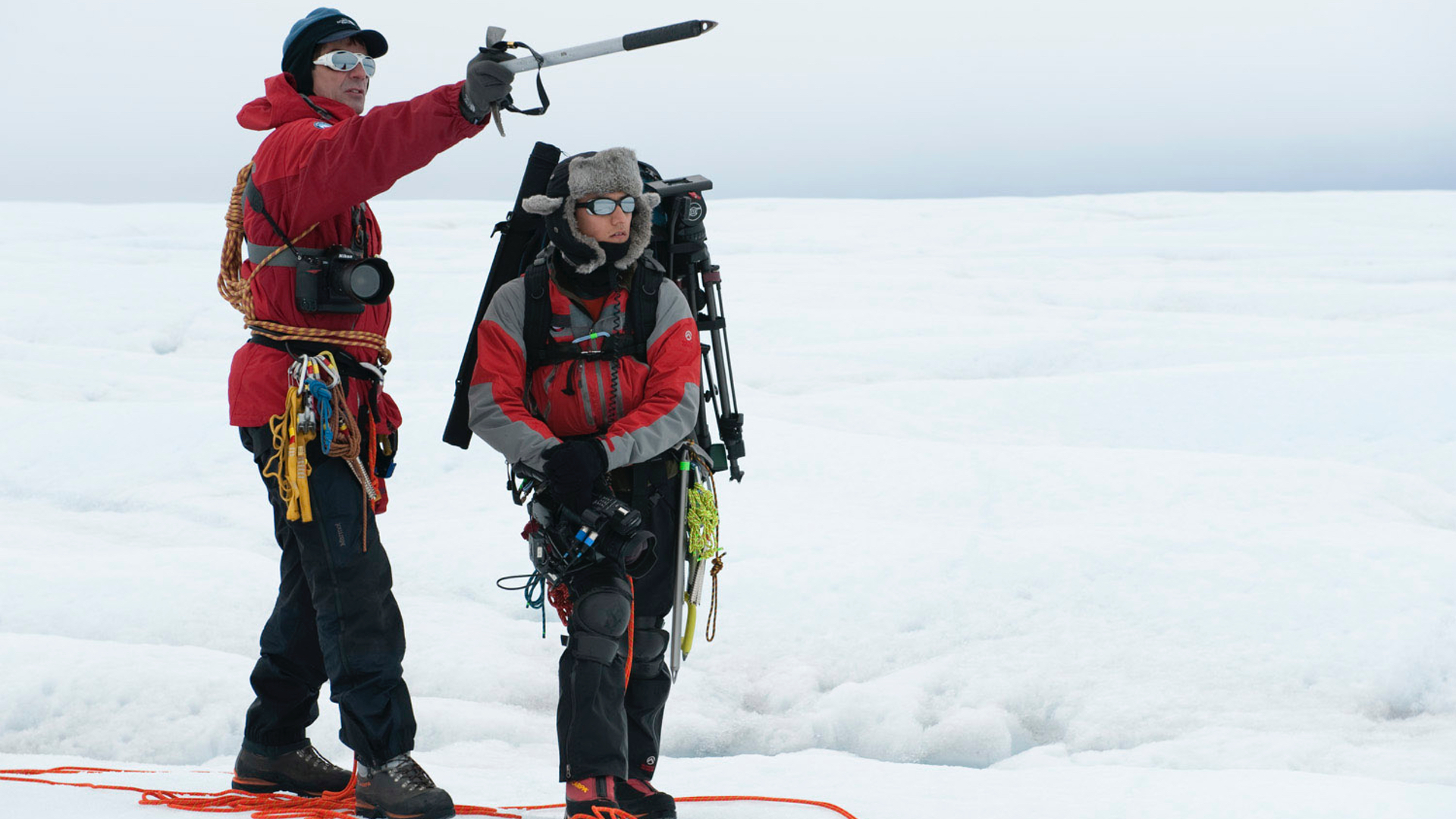
    As a campaign film, it is created with a key purpose, one to create impact in some way. Impact is notoriously hard to measure as it can happen in a diverse range of areas, such as the communities and landscape you film in, the audience that watch it, and the policy surrounding the main topic. This is just a few possible options. But without some way of measuring these changes, it is hard to prove any impact actually took place2.

    There is evidence in the film itself of the impact Balog’s project impacted different audiences. And there is evidence across media that people really enjoyed the film, it has won a lot of awards and been screened at many festivals. But the only way I really have to see what impact it has on audiences is through the discussions in my film clubs. So I asked them: what will you do next?

    There was a very mixed variety of responses! From going further into environmental science education to learn more about the issues in the film. To making a film or their own media campaign to spread the word. Some commented about wanting to go and see these locations and travel the world, which they admitted was a strangely ironic reaction – the wanting to “see these places before they disappear”. It ignited a love to travel and explore the world, it is “now or never” as when we are older many of these places will no longer exist.

    One of the responses, which I must admit resonated with me, was wanting to talk about the climate and ecological crises more in every day life. It was brave what Balog and his team did. And through their bravery they found a way to tell an important story. It feels like a brave thing to create an open conversation with people outside of our bubble, in a place we know we will be judged and where we might judge others, about what we care about. As if we create a space for open conversation with other bubbles, they might find an emotional connection too. One that can help to bridge a gap between different groups communities that haven’t yet heard a story they feel they can relate to.


    1. Here is a helpful overview, but worth a bit of research if you are interested: https://bigthink.com/high-culture/monomyth-heros-journey-campbell/ ↩︎
    2. To read more about Impact Production in film, television and media I recommend you look at this brilliant resource from the Doc Society: https://impactguide.org/ ↩︎

    Main picture credit: https://ryanmariotti.com/chasing-ice/
  • Film Club: 2040

    MY FIRST FILM CLUB OF THE NEW ACADEMIC YEAR! Ok. Down to serious business.

    I run a monthly environmental film club at UWE for students and staff to talk about the issues of climate change, environmental crises and social justice. I use the films as spring boards for group discussions, which question:

    1. What impact these films have on all of us as audiences?
    2. How we engage with these crises-based stories?
    3. What (if anything) we feel we want to do next?

    But really, these film clubs are just ways to talk about stuff that is big, scary and not always easy to discuss with friends and family. And that’s what they ended up becoming last year when I ran them, places to chat and be sad sometimes but to find hope through connecting with others.

    “Things already exist!”

    The miracle of seaweed. Director Damon Gameau visits the Climate Foundation project’s sea weed farm.

    From seaweed1 (my personal favourite), to local solar energy grids in Bangladesh, to farmers in Australia diversifying their crops to increase the health of their soils – 2040 captures the stories of different climate and environmental solutions. And as summed up beautifully by an audience member, “they already exist!”

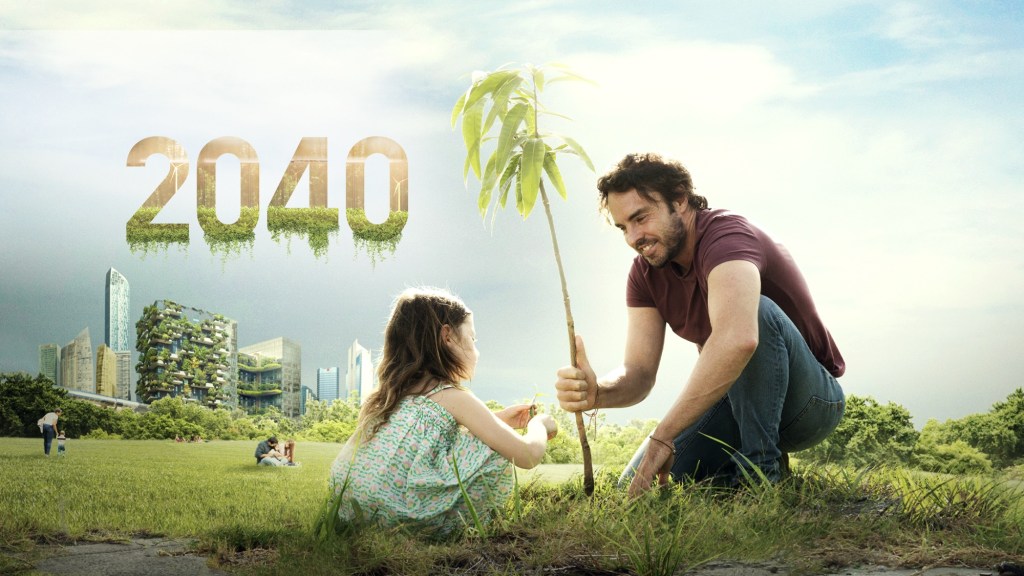
    Determined to tell a more hopeful story, one where we have fixed these complexed problems, Director Damon Gameau travels around the world to learn about about the solutions to these crises that already exist. Addressing the film to his 4 year old daughter, Gameau uses VFX and animation to visualise the world he wants her to live. He uses a technique called fact-based dreaming to create a world where humanity has made the changes needed to mitigate and adapt to these crises. What better film to start the year with.

    Rooftop gardens in cities for urban food projects.

    But how did the audience react?

    The response was overwhelmingly positive and incredibly hopeful! Students discussed how the film had empowered and engaged them with its informative and inspirational message. Many seemed energised by the positive message that contrasts the ‘doom and gloom’ crises narratives often pasted all over media. There was also surprise, particularly from those studying environmental topics, that there were so many new stories or solutions out there that they had never heard of. The variety of initiatives that were community-led and the innovative descriptions of the science and theory behind these potential fixes left us all really motivated – me included.

    However, it was rather dreamy. Despite the variety of solutions that Gameau managed to film, we were all left curious about some topics that we were personally concerned with that were briefly mentioned or not covered at all. A big one missing was waste.

    Automated transport schemes, like self driving cars, that were publicly owned were a big focus of the film.

    If we are to replace all of our old cars and tech with new eco-friendly alternatives and if we are to live in shiny new insulated houses, what happens to all the old ones? There was a big focus on all the technology that can replace what we already use. But a lot of us questioned what waste systems will be introduced to reuse or recycle the old materials. With debates around landfill vs incineration and the environmental damage inflicted by both, is it realistic that we can just replace everything? And what about the resources needed to make all these new materials, mine all the minerals and the equity of the labour behind it.

    Energy was a large focus of the film. With beautiful demonstrations of the potential local networks of renewable energy grids for transforming and empowering rural communities, but even urban ones too. This requires massive changes in infrastructure, if houses and roads are being adapted or removed to build new sustainable alternatives, which generates a lot of new green jobs. Here the film mentions the need for training engineers and fossil fuel workers to ensure a just transition for the labour force too. Though, like waste, the education and policy needed to ensure climate justice in this area are lightly touched upon

    An aged Gameau using a publicly owned urban transport system.

    Community was a key theme that ran throughout the documentary. And one of the topics the film club felt quite strongly about was sharing. There was a lot of support towards public ownership of things like transport and energy systems, but as described in the film, independence and personal ownership is a big part of modern society. It is deeply entwined with our identity, pride and egos too. To own a car, phone, shoes, watch – they are all symbols of status in a capitalist society. Though we agreed that a lot of objects spend most of their time going unused – like my hairdryer – the logistics and practicality of sharing these items didn’t always feel so straight forward. This is are also deeply tied into ideas of safety, access, privilege and trust.

    Would these shared items need rules and regulations? Would people be punished for not following them? Would these items always be cared for and respected?
    And would they put additional strain on individuals who have less access or are time poor?

    Several students pointed out how rich Bristol seemed as a location for community and sharing. With services to repair or donate old items and lots of local initiatives they could engage with. This knowledge and awareness (especially at the beginning of the student year) was extremely encouraging and others found it empowering to realise that some of these fixes already exist in our local areas. We just have to engage with them.

    Drawing in response to the ice breaker, “what does your 2040 look like?”

    Here I must acknowledge that this film was most likely targeted at an audience similar to the community that Gameau and his 4 year old daughter lived in. It focused heavily on the lives of those who would live in areas that may not suffer as much from the impacts of the climate and environmental disasters that we would face even if we did make all these changes by 2040. I do question whether a hopeful message could be too strong if not rooted enough in the realism of the devastation these crises will cause. Is there such a thing as too much hope – delaying change with the message that we don’t need to do anything as everything already exists and others are already doing the work of change.2

    I am not being realistic. As an hour and a half documentary that aims to showcase hopeful solutions that “already exist” and offer inspiration, it does a very good job. It is not there to provide the answers. That is, in a way, what it tries to engage audiences in with its online platform and hybrid format – encourage audiences to participate in climate action.

    What will you do next?

    Trying to give my group discussion its own narrative flow, I ended by asking the group what will they do next? What is the impact of the film on them? It was amazing hearing the students feedback about how they planned to incorporate some of the solutions into their lives by eating less meat, getting involved in urban vegetable planting projects and local community initiatives.

    However, there was a final comment that threaded through the discussion that I want to share here, to leave others to reflect on. We as a group agreed with the film and its message, many of us shared the same core values, but how do we authentically work and live a life guided by these values? This requires critical reflection, slowing down and sometimes going against the grain of what we consider normal in todays society. And this is the challenge that we were left with at the end of the film club.

    Overall, I want to say a MASSIVE THANK YOU to everyone who attended and my wonderful crew who support me with the running, organising and spreading the word. I feel very lucky to be able to do this and a little bit less alone every time I do. I hope that this film club can provide a place to share experiences and knowledge from our diverse backgrounds, and find connection with others as together we explore the uncertainty created by the complexity of these crises3. Where there is no right answer or single solution, but there are many individuals and communities working to build and reimagine a more hopeful future.

    Thank you.


    To finish this on a hopeful note, here is the toad I saw when cycling home. Hopeful as I hoped I didn’t run it over by accident (it was very well camouflaged as a leaf), then I slowly ushered it off the cycle path.

    I study wildlife films. I have no skills in filmmaking. But I do get very excited by my local wildlife.
    1. Here is a link to the seaweed farm project featured in the film https://www.climatefoundation.org/ ↩︎
    2. Interested in ways we risk delaying climate action? Here is a scientific paper on climate delay https://www.cambridge.org/core/journals/global-sustainability/article/discourses-of-climate-delay/7B11B722E3E3454BB6212378E32985A7
      And here is the cartoon version! ↩︎
    3. Want to find out more about the role film clubs can have in inspiring and empowering students? Here is a great article – https://www.tandfonline.com/doi/full/10.1080/13504622.2024.2314044?s=09#abstract ↩︎
  • Conferences: Critical Studies in Television 2024

    Slow conferences save the world!

    Maybe not completely.

    But, this years Critical Studies in Television Conference really made a strong case for online conferences, reducing travel and increasing accessibility. Run by Edge Hill University’s Television Research Group, this slow conference was scheduled over two weeks and mostly recorded, allowing speakers from all around the world to take part. This slower layout also allows those with differing time commitments and responsibilities to take part. Opening the door to audiences who can’t afford to travel or aren’t able to with the care or other commitments.

    TV saves the world!

    Themed on the UN’s Sustainable Development Goals, the 2 week conference really did explore the potential of a large variety of Television productions to inspire change and make an impact that may help ‘save the world’. With each paper themed on one or more of the 17 goals, researchers explored the ways their projects or chosen series interconnected with targets like ‘Climate Action’ and ‘Industry, Innovation and Infrastructure’ that aim to create “peace and prosperity for people and the planet, now and into the future.”1

    One of my favourite panels was ‘Representing Climate Change: An industry perspective2 – which I have to admit is where I borrowed the ‘save the world’ theme from (thank you). This panel linked beautifully with my own project with its focus on the commissioning and filmmaking practices of the television production industry. Here I was introduced to ideas such as ‘trojan horse’ storytelling that are story-led rather than issue-led – as the topics of climate justice can be beautifully interwoven into almost any content. But it also opened my eye eyes to the mind and decision making process of commissioners, as I began to question what would be considered ‘worthy’ content or what was the commissioning ‘norm’ for Natural History documentaries? And how could the desire to commission hopeful messages be balanced with creating space to discuss reality – without messages becoming overly ‘doom and gloomy’?

    This panel has also sent me on my own journey exploring what does it mean to empathise with the main character (also if they happen to be non-human)? How does it affect our ability to remain critical of the message? And what is the impact or the hero or anti-hero character on the audience’s engagement with behaviour change? What is our agency as audience members embedded within our human communities and much larger ‘ecosystems’? And how is this influenced by what we see on screen?

    All are questions that are prodding and shaping my own research, and there are no answers I can pretend to have yet. But I can say a massive thank you for the seeds of inspiration all the presenters planted! My mind was truly boggled. And the magic of a slow conference is that you have the time to reflect afterwards!

    I save the world?

    I really don’t.

    And this is me in the past trying to (not at the conference!)… with empathy and slowing down. I must have predicted I was going to write this blog…

    As the first conference I have presented at, it was an amazing opportunity to consider how the topic I research, Natural History documentaries, might help to nudge people in the right direction!

    The conference’s theme got me thinking about how the impact of these blockbuster wildlife series and their filmmaking process closely links with goal 12 ‘Responsible Production and Consumption’.

    This could have gone in many ways, and I could have easily written an hour long ramble, but I was tied to 20 mins! Just briefly a few of the topics I considered discussing:

    • The impact of BBC’s final episode of Blue Planet II – This episode changed how audiences thought about disposable plastics and encouraged the start of new habits – like reusing plastic bags. This example of sustainable behaviour change shifted consumption patterns and caused companies to change their production patterns too.
    • Carbon calculators – Broadcasters and production companies are increasingly practicing more climate aware filmmaking practices trying to cut down on their carbon footprint and their waste. With organisations such as BAFTA’s albert creating amazing resources and training to help production calculate and cut their CO2 emissions, sustainable practices are now becoming the norm.
    • Impact production – Amongst filmmakers, there is a growing interest in Impact production. This covers all from the impact a production has on its filming location, to the impact it has on its audience, and the wider socio-political impact of its message. It is very hard to concisely define ‘impact’ but Doc Society’s toolkit does a really good job of providing the practical steps filmmakers can take.

    Overall, it encouraged me to question – what does it mean to responsibly produce television content and how/can audiences responsibly consume what they watch?

    My presentation was far from perfect! I was ill, I had a big nervous sweat on and I needed a 2 hour nap afterwards (thanks to the magic of slow conferences yet again). But, I had some truly phenomenal questions in response! I was so relieved and excited by the engagement of others and their interest – particularly in the role of Sir David Attenborough!

    It was online! So no photos! But here is a sneaky peak at my last slide
    (when obviously gives me a standing ovation…)

    Gratitude saves the world!

    This one I believe a little more.

    I want to say a massive thank you to Edge Hill University and the amazing organisers from the Television Research Group for the fantastic and eye opening two weeks. And the beyond brilliant organisation and communication! It was a joy to attend and a real pleasure to present at.

    Thank you for making my first experience of presenting such a good one!

    1. Want to find out more about the history of the 17 SDGs? https://sdgs.un.org/goals#history ↩︎
    2. Here are links to find out more about the speakers of this brilliant panel: https://www.gcu.ac.uk/aboutgcu/universitynews/work-starts-on-climate-change-tv-drama-phds
      https://www.brown.edu/academics/college/swearer/programs/royce-fellowship/48/fellows/zo%C3%AB-fuad ↩︎
  • Imaginary Book club: How to Be Animal

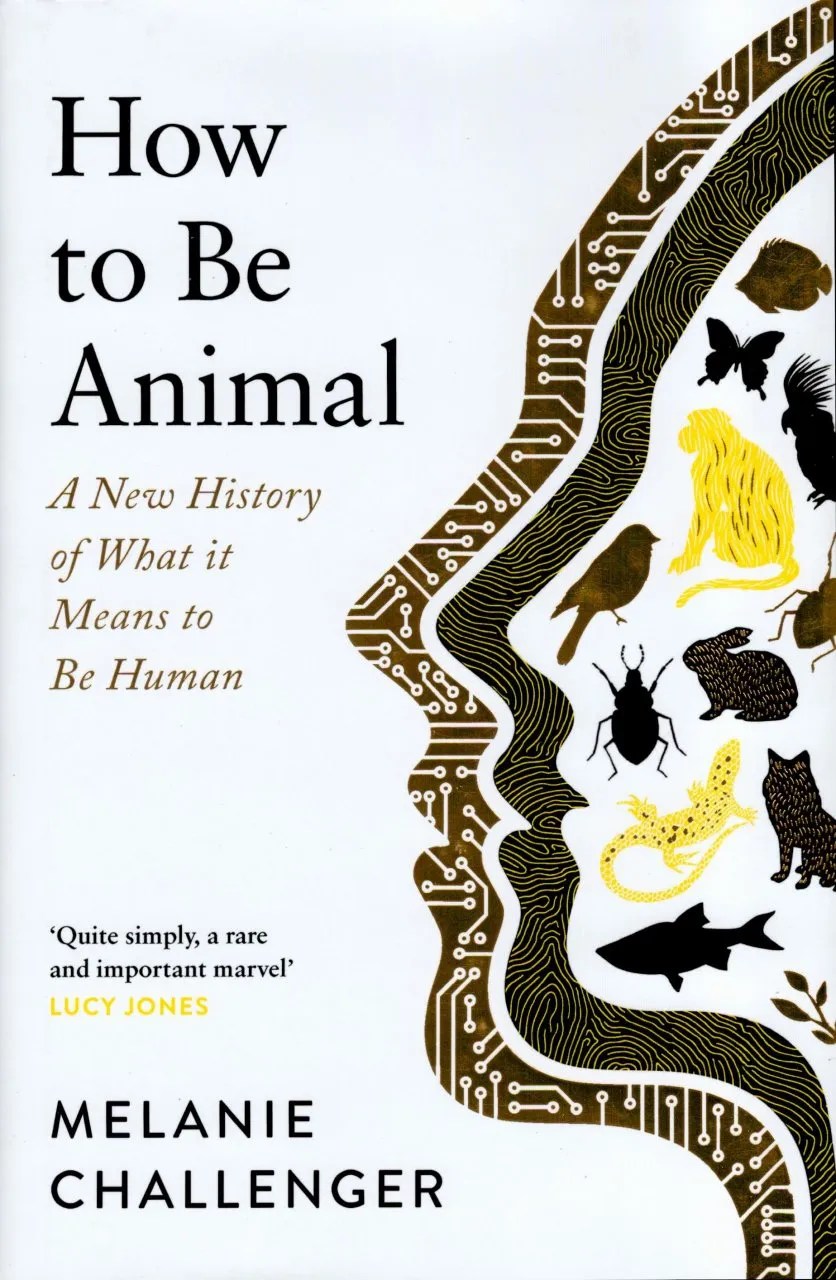
    How to Be Animal: A New History of What It Means to Be Human

    By Melanie Challenger (2021)

    The first few sentences of the book sum up Challenger’s argument beautifully, and my fascination with it:

    “The world is now dominated by an animal that doesn’t think it’s an animal. And the future is being imagined by an animal that doesn’t want to be an animal. This matters.”

    Before I begin, I must admit that I am still reading this book. Therefore, I am cheating and not running this imaginary book club very well. Nonetheless, I still have an emotional stake and a theoretical take which I intend to delight my imaginary readers with.

    “Do you think you are an animal?”

    What does it mean to be animal? What does animal actually mean? A simple internet search1 breaks the definition down to mean:

    • A living multicellular organisms in the biological kingdom Animalia,
    • An animal as opposed to a human being,
    • “A person without human attributes or civilizing influences, especially someone who is very cruel, violent, or repulsive”

    This brings me to Challenger’s first sentence:

    “The world is now dominated by an animal that doesn’t think it’s an animal.”

    As a living multicellular organism that belongs to the kingdom of Animalia, as a human, I am an animal who is opposed to being an animal. Humans may not think themselves as animals, but we also don’t want to be animals. I know there are some exceptions to this generalisation (i.e. I quite like knowing I am an animal). But throughout her book, Challenger clearly breaks down the human and animal oppositional belief that is core to our (Western) cultural way of thinking.

    The reason I write about it here is because this relationship (human and non-human) is key to my research. As how we think about the more-than-human world shapes our lifestyles, our decisions and how we engage with climate change, ecological crises and social justice.

    “Are you superior to animals?”

    From the teachings of religion that have told us humans have souls and animals don’t through to Darwin’s theory of evolution, there is a core belief that humans are different to and more than animals. This is because of the understanding that we have abilities that are more advanced than animals. Challenger begins the book with the quote from Darwin below (I have read more than the first page!),

    “Man with all his noble qualities, with sympathy which feels for the most debased, with benevolence which extends not only to other men but to the humblest living creature, with his god-like intellect which has penetrated into the movements and constitution of the solar system – with all these exalted powers – Man still bears in his bodily frame the indelible stamp of his lowly origin. “

    Charles Darwin

    Darwin’s theories challenged religious beliefs by suggesting that (hu)man came from the same “lowly origin” as the rest of the animal kingdom. Most likely some single-celled bacteria-like creature somewhere. Darwin, therefore, argued against the religious creation story. However, his theories do not disprove the religious dualism of human and animal. Instead it introduces a new secular way to justify it: the separation of human’s “noble” cognitive qualities – “our god-like intellect” – from our “bodily frame”, which is the unfortunate “inedible stamp” of our low animal origins.

    Challenger explains our ability to contemplate our emotions and physical reactions theoretically validates the separation of our rational minds from our bodies. It is our bodies and their irritating irrational emotions that are characterised as “animal”. This cognitive solution to dualism, as Challenger refers to it, maintains a hierarchal way of thinking that enables the idea of human exceptionalism, that humans are superior to animal due to their noble intellectual capabilities.

    “Does this matter?”

    “And the future is being imagined by an animal that doesn’t want to be an animal. This matters.”

    Yes, is my simple answer.

    Challenger describes how dualism between humans and the more-than-human world reflects the binary relationship we have with our bodies – the human rational mind and lowly animal bodies. She goes on to explain that these beliefs may have severe consequences. If we as a species base our worth on our mental capabilities, we risk creating a worth or value based hierarchal system within society. This could causes the very moral problem Challenger refers to as our paradoxical fear of being animal.

    Here I the definition the delights of the internet supplied me with above when searching for ‘animal’:

    “A person without human attributes or civilizing influences, especially someone who is very cruel, violent, or repulsive”

    Our (Western) society has traditionally functioned according to a hierarchy where humans intelligence or cognitive attributes are placed above bodily qualities. In this social hierarchy, we value rational intelligence as most important as it is least reliant on methods of knowledge that may be more closely linked to our body, emotions and the more-than-human world. Those at the top are therefore more human than other persons, who are consequently more animal. Thus the higher ranking humans are ‘justified’ in their superiority, not only over the more-than-human world but over other humans.

    If these humans are higher and more ‘perfect’, as they are less like the flawed animals they came from, there is a risk that a system of worth is created. Higher humans, higher value. A superiority system that objectifies and dehumanises others, justifying their exploitation due to their perceived lesser cognitive capabilities and resultant lesser societal value. This system is used as it justifies discriminatory and exploitative practices, allowing humans to distance themselves from the moral and ethical problems entwined with these abusive behaviours.

    Within the complex wicked problem that entangles the issues of social justice with the impacts of climate change and the ecological crises, I answer with certainty: yes. It definitely matters whether we think we are animals are not.

    Why does this book club matter for my research?

    When researching and creating stories that inspire transformative change, there is a need to address the ideas at the core of the tales we already tell. If these new stories are built on the societal beliefs that are used to justify exploitative and discriminatory practices, they will simply replicate and reconstruct them. Therefore, we need to start looking at ways of staying with the trouble and not distancing ourselves from the entangled wicked problems, while living-with the more than human world2.

    The questions I pose my imaginary audience are:

    1. Do you think you are an animal?
    2. Are you superior to animals?
    3. Does this matter?

    Find the book here: https://www.penguinrandomhouse.com/books/606910/how-to-be-animal-by-melanie-challenger/

    I hope you have enjoyed my imaginary book club series. I definitely have, despite it being imaginary. I hope it has given you food for thought and if you want to share your responses to any of these questions, get in touch!


    Writers note:

    1. As defined by the Oxford Languages dictionary. ↩︎
    2. Please read Haraway’s (2016) “Staying With The Trouble”  https://read.dukeupress.edu/books/book/27/Staying-with-the-TroubleMaking-Kin-in-the ↩︎ ↩︎

    Book cover: Challenger, M. (2021). How to Be Animal. A New History of What It Means to Be Human. UK: Penguin Books.

  • Imaginary Book club: My Life in Sea Creatures

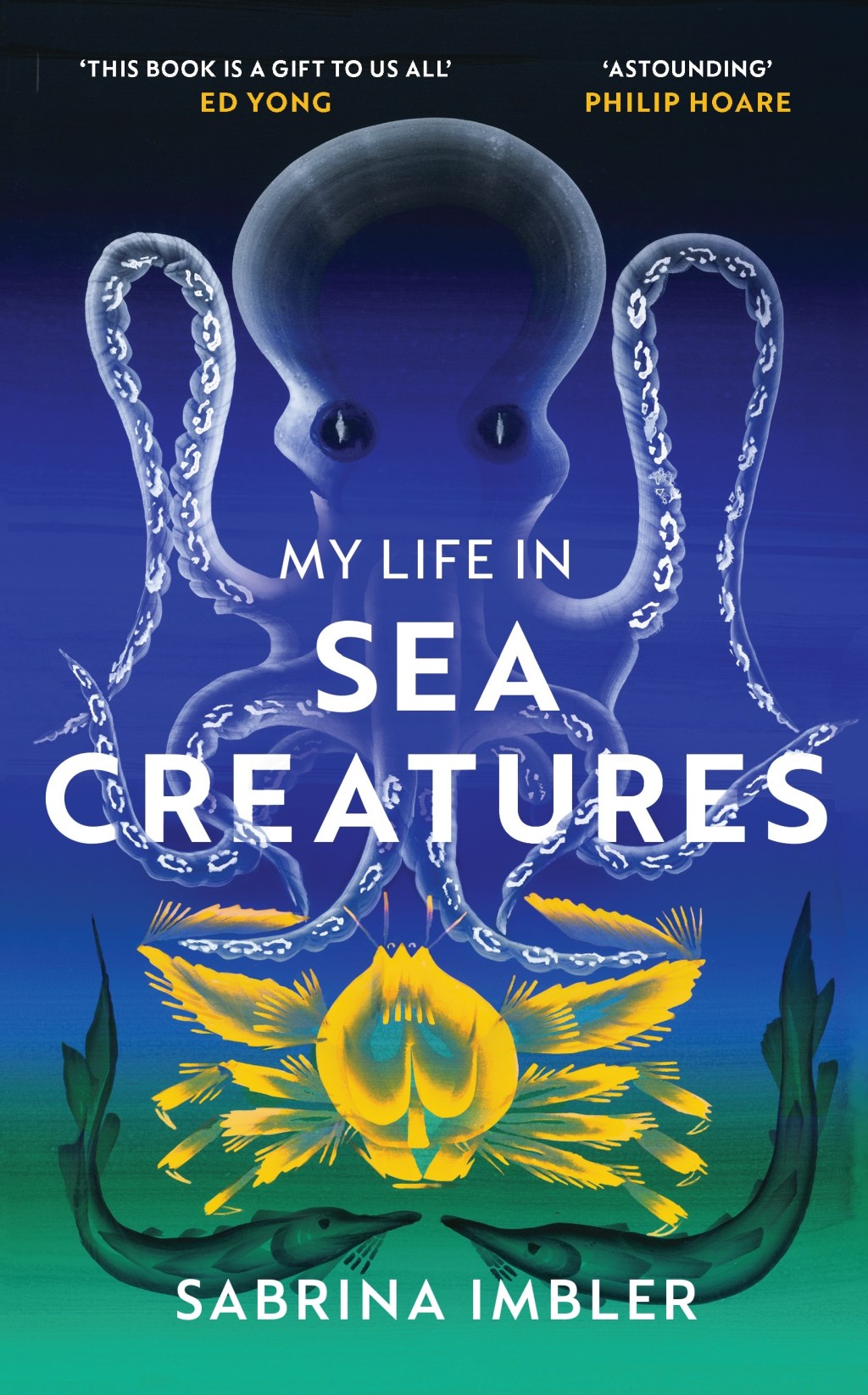
    My Life in Sea Creatures

    By Sabrina Imbler (2022)

    I actually don’t want to say too much about this book.

    But I will say this. I found the journey of reading it beautiful, moving and difficult. Imbler interweaves their lived experiences in with the lives of underwater animals with such care and respect, that it does not feel anthropomorphic. With each essay, I was very aware that I was experiencing their interpretation of these animals’ lives. Rather than being told what these animals were feeling or thinking. As such, it was both educational and magical. It felt more like embodied surrealist art rather than science communication. An experience that was so real, so present and material, yet I was in my body recalling my life experiences not putting myself in their shoes or these animal’s (metaphorical) shoes. It took me on an emotional and personal journey of healing in the company of these more-than-human beings.

    This is why I want to include this book in this imaginary book club and not talk too much about it. It is the closest I have ever felt to being-with the author and the more-than-human world without actually being outside in nature. I was always aware that I was being guided through an interpretation, that was not my own. I did not feel like I was being told that these animals feel human emotions, but that this way of assembling stories gave Imbler permission to explore their history, their body, their identity, by learning about the beauty of sea creatures. In turn, I felt I had permission to relive my own experiences. This gave me a deep seated compassion for both Imbler and these creatures. Yes I learnt more about these animals, but what I took away was knowledge of our combined need to adapt, survive and care for each other1.

    I am not going to tell you to read this book as I did with the others. It is your choice. For me, it is a difficult journey, but one I will never forget. You can find the book here: https://www.penguin.co.uk/books/441955/my-life-in-sea-creatures-by-imbler-sabrina/9781784743956

    But you can also listen Imbler’s reading of one of the essays here: https://open.spotify.com/episode/5kwY6ooHFKkA4rKdjjWGWF?si=lwMG63hXSQihg3hM1e_xVw

    Sabrina Imbler, I know you and most likely no one else will read this blog. But here is my opportunity to say thank you. Through hearing your voice I think I heard my own.

    To have a voice is a right. To use it is a choice. To speak out is a risk. To speak for the survival of others, that is our shared responsibility.


    Footnotes:

    1. Taken from the book blurb: https://www.penguin.co.uk/books/441955/my-life-in-sea-creatures-by-imbler-sabrina/9781784743956#:~:text=adapt%2C%20survive%20and%20care%20for%20each%20other. ↩︎

    Book cover: Imbler, S. (2022). My Life In Sea Creatures. USA: Penguin.

  • Imaginary Book club: Bitch

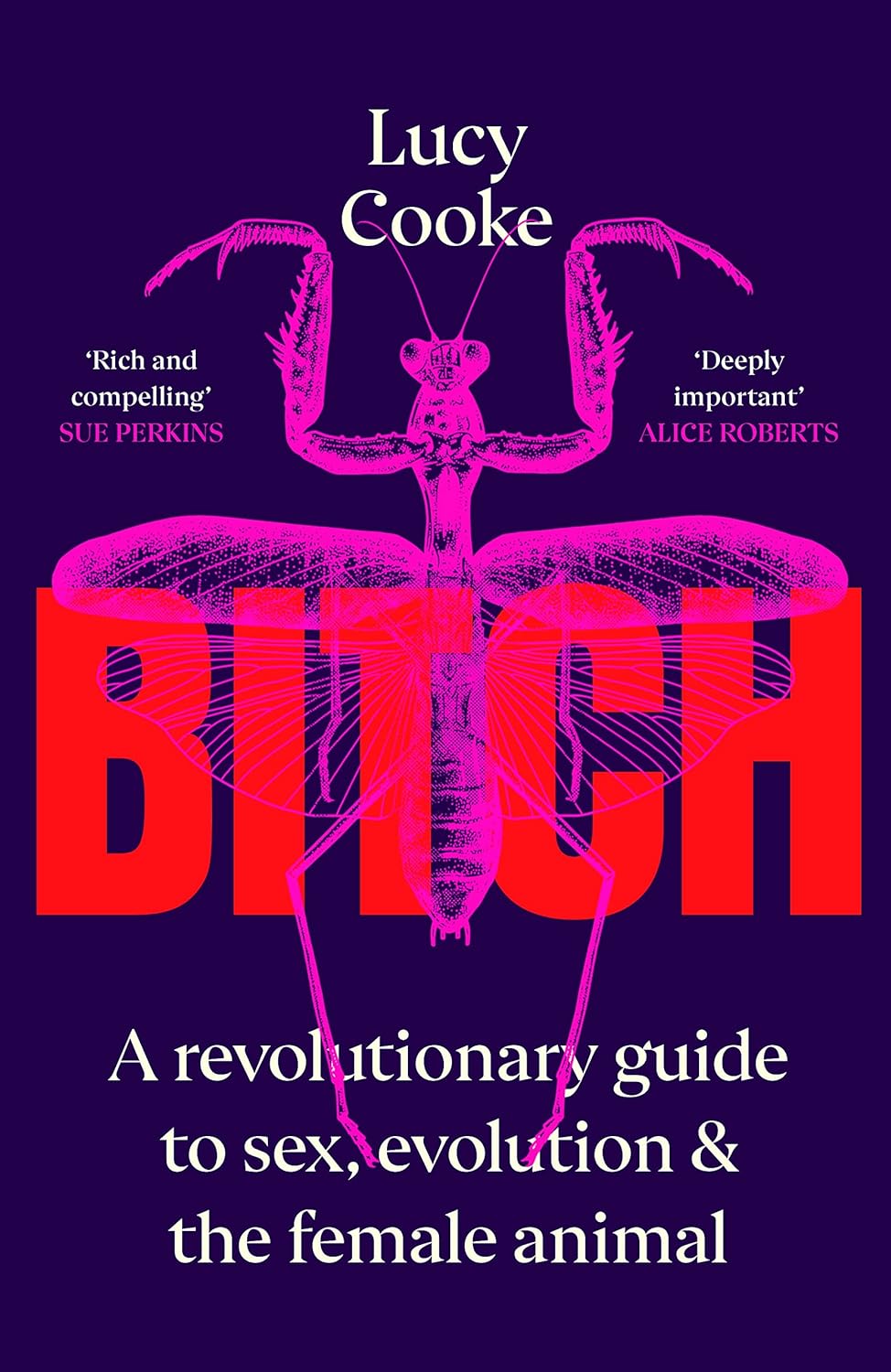
    Bitch: A revolutionary guide to sex, evolution & the female animal

    By Lucy Cooke (2023)

    I still can’t get over the feeling that I am cheating if I audiobook something rather than reading it. I audiobooked it twice if that makes it count more?

    Looking through my notes and bookmarks, there is key theme. These words come up a lot:

    • Bias – such as Conformation bias
    • Binary
    • Polarisation
    • Assumption
    • Expectation
    • Preconception

    Deeply rooted in science and thoroughly researched, Bitch ripped apart my outdated beliefs of bodies and behaviours in the animal (non-human) world. Like with her last book The Unexpected Truth About Animals, I was shocked at how my understanding of the more-than-human world was still built upon an old fashioned scientific system. This is despite my active research into fields of ecofeminism and queer ecology as part of my PhD. Honestly, sometimes these realisations left me a little ashamed. I recognised I didn’t always apply the same inclusive approaches to the non-human as I did to humans. It did leave me curious, nonetheless, to reflect on and disassemble my own scientific assumptions of the more-than-human world.

    Cooke’s performative reading really brought this book to life (I always recommend an audiobook!). But it was the context and detail she provided her arguments with that I found most impressive. It is very easy, for me at least, to feel anger or blame towards those who crafted or knowingly practice these scientific binary systems. Particularly, those who project these polarising systems and expectations onto others for their own gain. Cooke explains how these systems have been built into our (Western) cultural knowledge and educational models and how they have worked to supress groups in society – such as Cooke’s tales of talented female scientists. So it is easy and I could argue irresponsible of me to jump to blame, rather than ask myself the more difficult question of how I might support or express these exclusive and restrictive binaries in my research and practice.

    These traditional scientific expectations don’t only impact humans, whether they be scientists, school pupils or audiences of Natural History documentaries. But they also shape the way we understand and (physically and emotionally) relate with the more-than-human world. Cooke’s accounts of historic biological studies, such as those of bird mating rituals, paint a clear picture that the females of species were seen as the weaker sex. Whereas the males, who were more beautiful and fought for the females attention, were positioned by scientists at the top of the evolutionary hierarchy as they were more powerful and ruled their roosts in patriarchal systems. Please read the book for a much better telling! Cooke’s examples demonstrate the role that confirmation bias has played historically in developing our understanding of biological science. They clearly show how experiments and analysis were swayed (and not always on purpose!) as scientists tried to discover new knowledge that complimented the scientific existing systems and that would get them recognised in their fields.

    I found it a little scientifically complex at times. This maybe because I was listening to it and needed to see it in front of me, to read and understand the complexity of the genetic make up of the plethora of species Cooke discusses. Or maybe my biology and chemistry knowledge is not up to scratch! Nevertheless, I am aware this complexity may make the book harder for some to understand and as a result less accessible to lay audiences. But it does make a point through its scientific detail: bodies, gender, sex, behaviour, biology and even non-human politics is complicated! Let alone the convoluted human scientific systems that try to capture them in their objective scientific experiments. There are so many factors – biological, behavioural, environmental… that affect the web of ecology that these animals exist in. It is hard (arguably verging on impossible) to pull one animal out of their habitats and state they exist in one clearly defined state.

    Yes this makes it hard (again verging on impossible) for storytellers, like those in Natural History documentaries or teachers, to convey the complexity of factors that shape the diverse and changeable ecosystems. Especially now that climate change and the environmental crises are rapidly changing everything! I can’t imagine how tricky it would be to write it into a concise textbook! How would you capture the detail and context? But maybe I am missing the point. Surely it is this complexity that makes it beautiful and rather interesting in the first place? Maybe that’s just me, with my mild obsession about learning to live-with the messy entangled web of life at this time of global crises (again I highly recommend Haraway’s 2016 Staying with the Trouble).

    So the questions I leave my book club with today are:

    1. Which story impacted you the most and why? Were any of your personal beliefs challenged?
    2. What binaries, assumptions and expectations can you identify within our cultures scientific knowledge? And how might our scientific understanding promote or limit certain groups?
    3. How could a new understanding of evolutionary biology shape our relationship with the more-than-human world? And how might this affect how we engage with the global crises?

    Maybe, my main take away from this book is a reflection on my emotional journey through anger, blame and shame to one of excitement, wonder and curiosity. And maybe its just an increased appreciation for how truly complex the more-than-human world is. What I do know is that I have lots of knowledge gaps where context and detail is missing, which has limited my ability to be critical of my own beliefs. Therefore, I would like to think I have more awareness of my own biases thanks to Cooke. Or at least I am more aware that I need to be more critical of my own beliefs, binaries and biases, as they may unintentionally support traditional polarising systems that empower some while supressing others. This critical reflection is not only important in my research, but is something that I must practice in my daily life as well.

    I hope this book gets your brain ticking as much as it did mine. And good luck if you too face some hard questions. If I had any advice, it would be sit with the hard ones and let them stick. My other advice would be to give the book a go!

    Find the book here: https://www.penguin.co.uk/books/433914/bitch-by-cooke-lucy/9781804990919

    Go now! Read it! And let me know what you think.


    Writer note:

    Book cover: Cooke, L. (2023). Bitch. A revolutionary guide to sex, evolution & the female animal. United Kingdom: Penguin.

  • Imaginary Book club: The Unexpected Truth About Animals

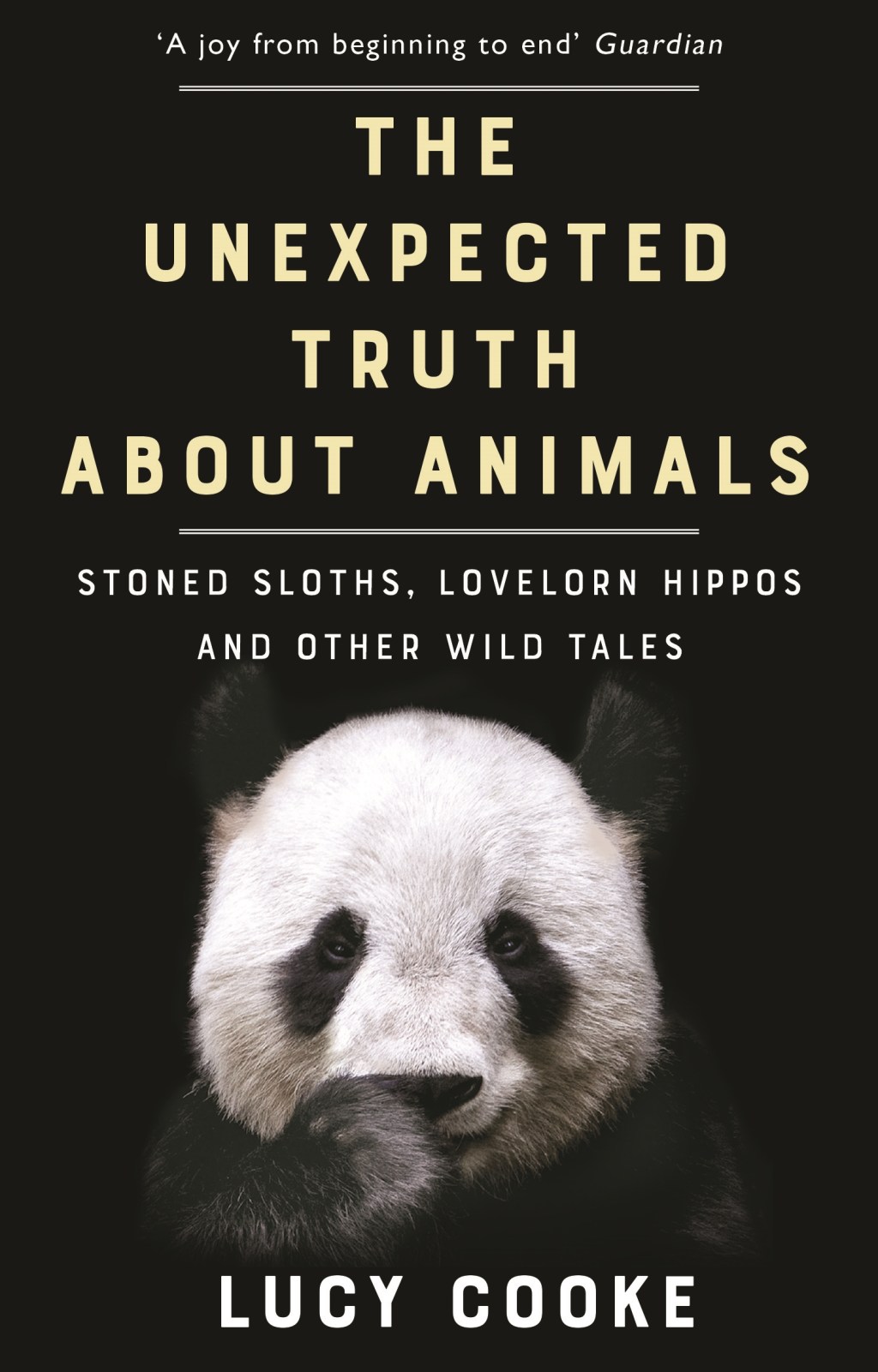
    The Unexpected Truth About Animals: Stoned Sloths, Lovelorn Hippos and Other Wild Tales

    By Lucy Cooke (2018)

    I was addicted to this book when it first came out. I remember reading it on the bus and quickly flicking past the honest photo of hyenas, nervous the child behind me was looking over my shoulder. As for those of you who don’t know, female hyenas have pseudo-penises. The alpha-female also rules their matriarchal clans. Female spotted hyenas are fierce, clever and really rather gorgeous!

    The book blew my mind. I quickly realised that these animals’ lives didn’t fit into the tidy boxes that my school education had instilled in me. More so, I wondered why all the educational documentaries I had watched (and worked on) had never told these stories. Cooke did used to work in TV after all. I quickly became aware that what I thought to be “nature” was a very well crafted PG-13 rated story. A bit like the Disney-fied version of reality. The story of pristine and human-less wildernesses seemed separate from and different to human me. But everything I read broke down the protective barriers around what I thought nature was, with a sledge hammer. As in the book, nature seemed to end up being everything I thought it definitely was not.

    Yes, the book is designed to be entertaining and Cooke crafts her chapters in ways that trigger shock and make you laugh. But it really was a personally revealing read, as I began to question my reactions – why was I so shocked? Why did these stories differ so much from what I expected? It made me curious about how else my understanding of nature might be limited. And how I might the well crafted story I had previously believed to be true affect how I value the natural world. And why on earth did I believe this more boring version of reality in the first place? Who crafted the story of what nature was before it was sewn into my school’s GCSE textbooks?

    Now that I knew female sloths deposited little spiral poos underneath their tree to leave a scent trail for potential males, I went off and did a lot of my own research. I spent hours at the Natural History Museum quizzing poor PhD students on the bullying eusocial antics of the female queen naked mole rats. I went to London Zoo’s valentines day special to end up watching a VR headset demo of the VFX inside of a duck’s oviducts. Falling a little off track.

    The book started my journey down a long path where I began “queering” nature. I questioned what stories I was told by society, what stereotypes about gender and sexuality these stories projected and how they influenced my relationship with the “natural world”. I wanted to know what boxes and binaries I believed in and whether they had any effect of how I was physically able to experience nature. Apart from the fact that I started quoting this book at everyone I met, definitely not to the child on the bus, learning these new facts made nature feel more “human”, or maybe the other way around – it made me feel less human and part of something wider and much more complicated.

    This book encourages the reader to question their beliefs and expectations. It challenges us (humans) to explore our perceived differences and separation from nature. It also encouraged me to change one word in this sentence: human vs nature TO human with nature. How does the second one feel to you?

    So the questions I leave my imaginary book club with are:

    1. How did you react when reading the book? And did your reactions challenge what you think of as nature?
    2. How do you now define nature? And where do humans fit in?
    3. Does it matter if the stories society tell us about the natural world hide certain facts?
    4. And, how much do you love sloths?

    Finally, to link in with my PhD research, I leave you with one final question: what impact do these cultural stories about the natural world have on how we engage with climate, environmental and social justice?

    Find the book here: https://www.penguin.co.uk/books/433913/the-unexpected-truth-about-animals-by-lucy-cooke/9781784161903

    Or in any good library!

    Enjoy!


    Writer note:

    Book cover: Cooke, L. (2018). The Unexpected Truth about Animals: Stoned Sloths, Lovelorn Hippos and Other Wild Tales. United Kingdom: Black Swan.

  • Imaginary Book club: Queer Ecology

    In a world where I have more time, or don’t sleep, I have fantasised about running my own book club. Here I would explore with others all the little research niches I dip my toes into that contextualise and feed my PhD. Admittedly, it might only be me attending my own book club, but I thought I would post some of the ideas (and book obsessions) on this blog to keep track and bunch similar themes together.

    In this themed ‘strand’ of imaginary book club meetings, I will focus on: Queer Ecology. And I will post a series of entries with my reaction to different books that would read with this “club” (or alone).


    But what does it all mean?

    But what is queer ecology?” I hear my even more imaginary audience of me, myself and I ask.

    The term queer was reclaimed in the 80s by the LGBTQIA+ community after a long and complex history. The term rejects labels and perceived norms or identities that are created and projected by culture1. It is often used as an umbrella term, or container, that interweaves many diverse sexualities, identities and forms of expression. As such, it refuses to live inside a pre-prescribed box and takes many meanings and shapes for different people2.

    This links nicely into “queer theory” which emerged in the 90s as a field of post-structuralist critical-theory3. This field of study critiques the structures and power dynamics within society that influence and shape the definitions of gender and sexuality4.

    But why is this important?” My imaginary audience questions impatiently.

    Photo by Paz Arando on Unsplash

    I find queer ecology very exciting. It pushes the boundaries of society’s definition, understanding and relationship with nature. Have you ever asked yourself?

    1. What do I mean when I talk about “nature”?
    2. What is “unnatural”?
    3. Where does “human” fit in with my idea of “nature”?

    I often start my workshops by asking a these questions, in some form or another, and it might be how I start the book club. In everyday conversations, we often speak about nature as a specific place or object that is different to humans. Resultantly, our language often creates a human/nature divide. There are many binaries we use in language that can shape what we see as natural/unnatural and how we experience nature. This notion of what is and what is not nature affects how we experience and relate with the natural world.

    And that is why it links so closely to my research! As I am slowly pulling apart layers to help understand how we experience and relate to the nature in Natural History documentaries. For example, I may perceive the “nature” in Natural History documentaries to be more pristine and wild than the weeds growing between the paving slabs outside my front door. I may call on screen nature “wilderness” and the other nature irritating. Or, in politics and economics nature is often referred to as an object or a resource that humans have the right to use for their personal needs and entertainment. Trees exist for the purpose of their wood, so that I can fulfil my need for a new desk. The nature reserve’s purpose is for me to spend time and walk through without seeing any urban or human development, giving me a sense of nature connectedness.

    “So what?”

    The reason I break this down in quite so much detail is because the concept of queer ecology, similar to its use by the LGBTQIA+ community, aims to break down culture’s normalised understandings of the nature world. What if nature didn’t have a purpose? What if we (humans) were not separate to but exist with nature?

    Queer ecology, therefore, uncages the concept of nature and what is natural (setting it free!). While it is built upon the intersectional roots of ecofeminism and other feminist science studies, queer ecology encourages us, well me and some others, to explore diverse ideas and to reimagine other ways of living-with “the more-than-human world”5. Please read Staying with the Trouble by Donna Haraway (2016)6 in an adjacent book club to better understand why I use “living-with”, but that is not the focus on this imaginary meeting.

    There is a lot more to the fascinating concept of queer ecology, especially why it is relevant in a time of climate and ecological crises, which is why it tightly intertwines with my PhD research in looking at how Natural History documentaries communicate the global climate, ecological and social injustice crises. I greatly encourage you to take a deeper dive into the topic if it interests you (or even if it doesn’t!).7


    Finished with the lecture

    Photo by Janayara Machado on Unsplash

    Anyway. Books!

    Here are some of the books that I plan on discussing:

    1. The Unexpected Truth About Animals. Stoned Sloths, Lovelorn Hippos and Other Wild Tales. Lucy Cooke (2018)
    2. Bitch. What does it mean to be female? Lucy Cooke (2023)
    3. My Life in Sea Creatures. A young queer science writer’s reflections on identity and the ocean. Sabrina Imbler (2022)
    4. How to Be Animal. A New History of What It Means to Be Human. Melanie Challenger (2021)

    This list is not very extensive! But my book club does not last for ever. And there are many other books on my to read list. Including: Evolution’s Rainbow: Diversity, Gender, and Sexuality in Nature and People, by Joan Roughgarden (2013). I love to get people’s recommendations too, so please do send through if you have any thoughts!

    I am still learning about queer ecology, and the many surrounding fields it has grown from, so some of my interpretations are most likely wrong or limited. So I really do recommend that you go and explore it if this has peaked your interests. I wish you a mind boggling experience!


    Footnotes:

    1. Defined by Stonewall here: https://www.stonewall.org.uk/list-lgbtq-terms#:~:text=Q-,Queer,-Queer%20is%20a ↩︎
    2. For a more detailed history and explanation of queer please see here: https://new.lgbtqia.wiki/wiki/Queer ↩︎
    3. Post-structuralism is a philosophical movement that disregards the “structuralist” idea, that we can understand and interpret the world through pre-established socially constructed ideas or language: https://www.sciencedirect.com/topics/social-sciences/post-structuralism ↩︎
    4. A more thorough explanation with useful book suggestions are linked here: https://libraryguides.fullerton.edu/c.php?g=1134908&p=8436083 ↩︎
    5. Intrigued by queer nature? Have a browse here: https://www.britishecologicalsociety.org/introducing-queer-ecology-embracing-diversity-in-the-natural-world/ ↩︎
    6. Must read! https://read.dukeupress.edu/books/book/27/Staying-with-the-TroubleMaking-Kin-in-the ↩︎
    7. Deeper dive https://www.climateculture.earth/5-minute-reads/what-is-queer-ecology ↩︎

    Header photo by Brielle French on Unsplash

  • I have been to MANY of the events this week that were part of the Bristol and Bath “Festival of Nature“, run each year by the Natural History Consortium. In its 21st year, this festival has been brilliant with a wide array of activities available for lots of different people – not just for kids! From the opening wild weekend where I saw a woven island planter launched from outside the amphitheatre into the canal – soon to become home for water plants and water birds, to a variety of screenings of Natural History documentaries that took me to the IMAX in the aquarium and into BBC Studios. I have met many amazing people and learnt an awful lot too, and over the next few blog posts I will share some of my reflections about how these events interweave within my research.

    Behind the scenes talk: Life on Our Planet with Silverback Films

    Seeing a VFX dinosaur on an IMAX screen really does leave an impact! But not as much impact as watching the production team plan a sequence in their kitchen with a phone on a Lego rig filming little toy dinosaurs. Creativity and ingenuity was really at the heart of the production team when Silverback Films developed Life on Our Planet (2023) for Netflix.

    Note – this picture is from the entrance of BBC Studios, not Netflix or Silverback!

    What stood out to me is the mixing of genres. Not being able to film real animals in the wild or in studio set ups as traditional of Natural History films, there is a lot creativity and to and fro-ing between the series creators, scientists and VFX team. This was all with the aim to make something that might resemble what the pre-historic creatures looked like and how they lived many years ago. The show producers who gave the talk were specific in that they wanted the series to “feel like a drama” while being factually accurate. What is clear to me is that the series feels like an entertaining and beautiful re-enactment of Darwin’s “survival of the fittest“, as each episodes captures the evolution and battles for survival or the dynasties that existed in pre-historic times.

    What also caught my attention about the Lego sequence, apart from the choice of toys, was how the producers discussed framing these sequences like they would other animals that they film today. Whether distant family relative, like woolly mammoth and elephant, or similar ecological role, like of the predatory pack or lone hunter, the filmmakers would replicate the filmmaking techniques they would use “in the wild” – with the help of amazing VFX artists. For example, they discussed the techniques they would use to frame a predator following a scent trail to help build up the tension for the hunt scene that would follow, except they used this to capture a scary dinosaur that was much bigger than the polar bear or tiger that would classically be filmed this way.

    At the entrance of BBC Studios you can see displayed some VFX toy-like figures that were used to film the BBC’s version of Life on Our Planet, called Prehistoric Planet

    Yes, the pictures I am using in this blog are not from the talk! My blog skills are not up to scratch and I am still trying to remember to take photos when I go to these events. But, I think they make an interesting point. Both BBC and Netflix commissioned a pre-historic themed “blue-chip” Natural History series, which were made at similar times and released at similar times too. Both series were made using standard wildlife techniques mixed with a lot of VFX and tell the stories of the same part of history. They both took a long time to produce, with Life on Our Planet having a production period of roughly 5 years, which would have taken them through the Covid lockdowns. Whether they were commissioned long before Covid I can only assume – if it took 5 years to make – but it is also more convenient to make a VFX sequence in a room then go out on remote locations and film when travelling was much harder or not allowed at all. More recently with two similar sound-themed series also coming out, Apple’s Earthsounds (2024) and Sky’s Secret World of Sound with David Attenborough (also 2024), it does encourage us to question why so many similar Natural History series are being made now that they are no longer limited to being produced solely by the BBC.

    With my research’s focus on climate and ecological justice discourses, or what I am starting to call ‘global crises discourses’, the filmmakers at this event finished with a very interesting point: the main character they discovered through the series was “Earth”. Highlighted by the series’ gorgeous exploration of plant species, such as mosses, lichen and ferns, it was not the individual main characters of each story – the many types of long-named dinosaurs – that they aimed to teach us audiences about. But, they wanted to focus on how all of these species interrelated in wider systems that together survived from the mass extinctions of the past and have led to the evolution of what exists today.

    The filmmakers outlined that they wanted to teach audiences about the past extinction events to give them an appreciation for the current human-caused 6th mass extinction. It was this pre-context they hoped that would give audiences the ability to understand today’s ecological crises and what the filmmakers saw as our very unique position in having the “ability to reverse the current order of events.”

    I do not personally agree that we can reverse the extinctions and level of degradation that has occurred so far, but I do believe that we can act today to mitigate and adapt to the changes that are yet to come to reduce the impact of acting out ‘business as usual’. I do agree with the filmmakers’ call to action, which felt fitting within the Festival for Nature and all of its education and practical activities to get people more engaged with the more-than-human-world.

    I want to end on the final message of the series: that as humans we have caused this extinction and we alone have the ability, unlike other animals, to change it and prevent the process of extinction. This message still sits with me today, as having watched the survival of so many incredible species in this series I am left feeling not quite as powerful as part of the human species, who wouldn’t have survived many of those extinctions, and more powerful with the encouragement to act to save the more-than-human-world I love so dearly. It’s safe to say I thoroughly enjoyed this highly entertaining show, while I have also been left wondering am I really that unlike the ‘other’ animals and plants that are threated today? And what is my place with all these other species as part of and within the main character “Earth”?

    Thanks for reading and I would be really interested to hear any comments or questions which you can easily send on through the contact page.

  • Home: Fences

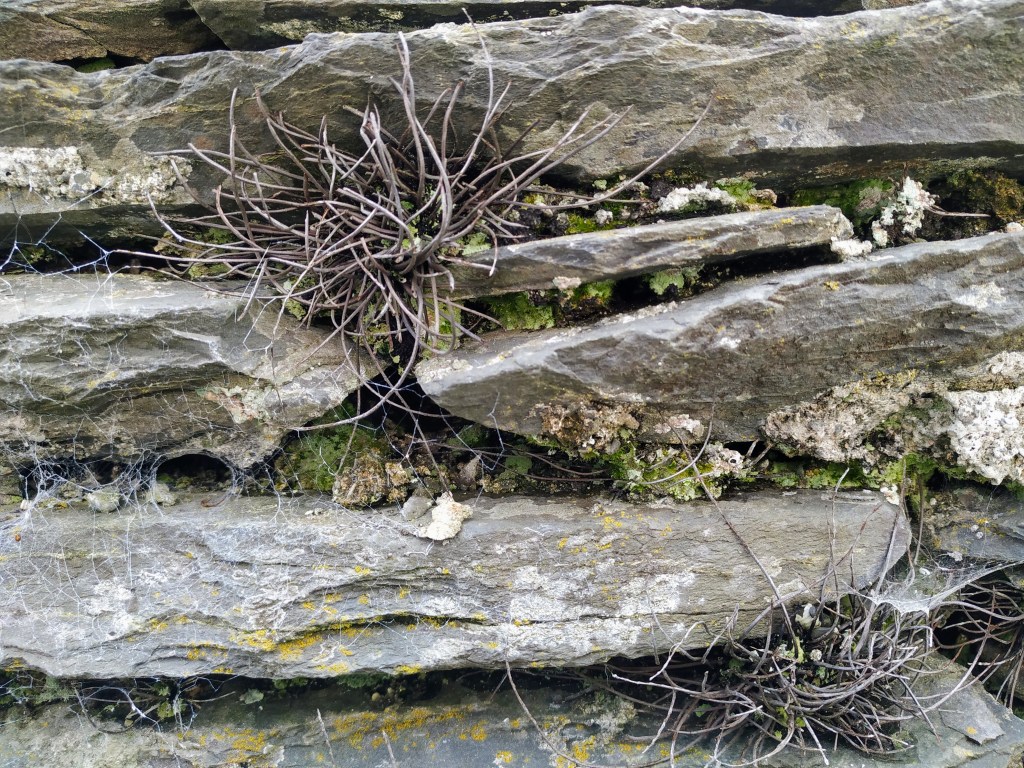
    I am not a photographer. But I have been enjoying using my phone with its broken lens to explore the idea of ‘belonging’ and what it might mean for the more-than-human-world.

    When on my walks, I can find homes in all shapes and sizes. The homes I find in the dead bits of wood or piles of old rock, that separate me from the land I see on the other side, in these homes I find something curious.

    Something new, alive and thriving from what is already dead.

    Something that lives in the things used to enforce boundaries, the human-made separation that keeps me out or protects and maintains the ‘nature’ that is kept within.

    I like the idea that even in the human structures that keep things apart, the more-than-human-world prevails.

    I wonder what ideas might live in the human-made gap, that exists in language and in culture, between what is called the ‘human’ world and what is called ‘natural’ world.

    What might it mean to belong to one and not the other? Could I live in the middle? Where might we find home?